Best AI Tools for Lawyers (2026): Tested & Ranked
SaaS & AI Tools Specialist — reviewed and fact-checked by the AIfoundly editorial team.
Some links on this page are affiliate links. If you buy through them we may earn a commission at no extra cost to you. This never affects our rankings or verdicts.
Affiliate disclosure: Some of the links below are affiliate links. If you subscribe to a tool through them, we may earn a commission at no extra cost to you. This never changes our rankings or verdicts.
Sixty-nine percent of legal professionals now use AI for work. Only 42% are using tools built specifically for legal work. That gap is where most of the risk lives. General-purpose AI like ChatGPT and Claude can draft a memo or summarize a contract in seconds. They cannot reliably cite a case, verify a statute, or guarantee that the answer they produce reflects current law. In legal practice, that distinction is not a feature comparison — it is a liability question. This guide covers the tools that law firms are actually paying for in 2026, what each one does well, what it costs, and when it is worth the investment. The split between a $20/month tool and a $100,000 annual contract is real, and so is the difference in what you get.
Key Takeaways
- Legal AI in 2026 splits in two: database-grounded tools (Harvey, CoCounsel, Lexis+ AI, Westlaw) that cite verifiable law, and general chatbots that can hallucinate citations.
- For research you will rely on, only database-grounded tools are defensible — that is the single most important filter.
- Small firms get the best value from Spellbook (contracts in Word) or Clio Duo (~$50/mo); enterprise tools start at $1,000+/seat.
- 54% of firms have no AI governance policy — if you use AI on live matters, write your own verification protocol first.
Our pick: Clio Duo or Spellbook for small firms; CoCounsel for mid-sized; Harvey only for enterprise volume.
| Tool | Best For | Price |
|---|---|---|
| Harvey | Enterprise workflows and research | $1,000+/user/mo |
| CoCounsel | All-in-one legal assistant | $200–500/user/mo |
| Spellbook | Contract drafting inside Word | $99–300/user/mo |
| Lexis+ AI | Citation-backed legal research | $170+/user/mo |
| Westlaw AI | Research and citation verification | $194+/user/mo |
| Clio Duo | Practice management | ~$50/mo add-on |
| ChatGPT | Drafting and brainstorming | $20/mo |
The State of Legal AI in 2026
The ABA Legal Technology Survey tracked AI adoption in law firms at 11% in 2023. By 2024 that number had reached 30%, and among firms with 100 or more attorneys, 46% reported active use. The 2026 8am Legal Industry Report puts general-purpose AI use across legal professionals at 69%.
The adoption has outpaced the infrastructure around it. 54% of law firms have no AI training program. 43% have no AI governance policy. Tools are being used on live matters without any firm-wide standard for how outputs should be verified or what data can be shared.
Sources: ABA Legal Technology Survey Report (2023–2024 adoption figures) and the 8am Legal Industry Report (2026 usage figures).
Who wrote this: AIfoundly publishes vendor-neutral research for professional audiences. This guide is compiled from public pricing pages, vendor documentation and third-party adoption research, and is reviewed whenever a covered tool changes its pricing or features. It is general information, not legal advice.
The practical result is that most lawyers using AI in 2026 are improvising. This guide is an attempt to replace improvisation with a clear picture of what the tools actually do.
General chatbots versus legal-native platforms
The most important distinction in legal AI is not which tool has the best interface. It is whether the tool is grounded in verified legal databases or generating answers from pattern matching alone.
ChatGPT and Claude produce fluent, confident legal language. They also hallucinate citations — cases that do not exist, holdings that are wrong, statutes that were amended. For drafting first passes and summarizing documents you already understand, they are genuinely useful. For legal research you will rely on without independent verification, they are a liability.
Legal-native platforms like Harvey, Lexis+ AI, Westlaw AI, and CoCounsel are built on top of verified legal databases. Their answers come with citations you can check. That is the threshold that separates tools lawyers can trust for research from tools that require a full verification pass before anything goes into a filing.
The Big Three for Legal Research
Harvey — The Enterprise Powerhouse
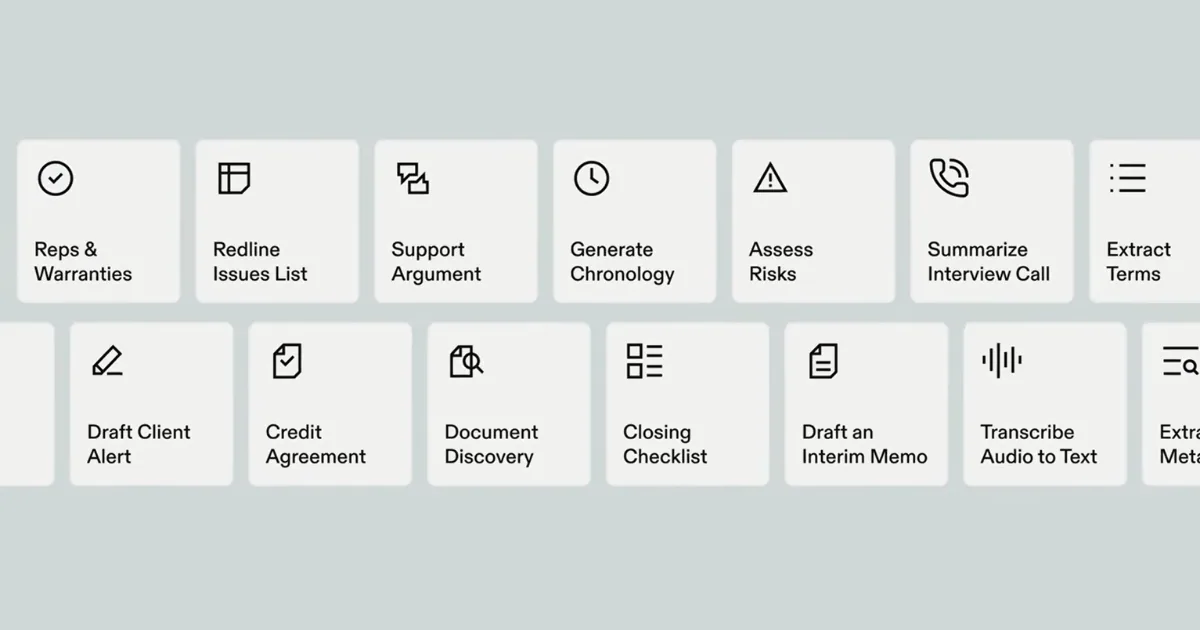
Harvey is not a chatbot. It is a workflow engine built for law firms that need AI to operate at matter level — across documents, across practice groups, across the full lifecycle of a case or transaction.
In June 2025, Harvey and LexisNexis announced a strategic alliance that integrated U.S. primary law and Shepard’s Citations directly into Harvey’s platform. Before that update, firms using Harvey for research were working without database grounding. After it, Harvey became a credible research tool in addition to a workflow and drafting platform. That alliance is the single most significant product development in legal AI in the past twelve months.
Harvey is priced for large firms and is sold as an enterprise product. Solo practitioners and small firms are not the target customer, and the pricing reflects that clearly.
✅ PROS: Most powerful legal workflow engine available in 2026. Post-2025 LexisNexis integration adds verified research to an already strong drafting and matter management platform. Built for multi-matter, multi-practice environments. ❌ CONS: Enterprise pricing excludes the majority of the legal market. Requires significant onboarding investment. Not practical for firms that need a tool they can deploy this week. 💰 PRICE: Approximately $1,000+ per seat per month. Annual contracts typically range from $50,000 to $100,000+.
CoCounsel — The Reliable All-Rounder
CoCounsel from Thomson Reuters is the most practical choice for mid-sized firms that need legal-native AI without Harvey’s enterprise commitment. It handles legal research, document review, drafting, and contract analysis, and it runs on top of Westlaw’s research stack for citation verification.
The positioning is straightforward: CoCounsel is what you buy when you need a serious legal AI tool that your team can actually use without a six-month implementation process. It is not as customizable as Harvey for complex enterprise workflows, but for the majority of law firm use cases it covers the ground that matters.
✅ PROS: Deep Westlaw integration for verified research. Strong document review and drafting. More accessible than Harvey for firms that need to deploy quickly. Thomson Reuters support infrastructure. ❌ CONS: Less customizable than Harvey for complex multi-matter workflows. Pricing still puts it beyond solo practitioners and very small firms. 💰 PRICE: Approximately $200–500 per user per month.
Lexis+ AI — Gold Standard for Citation-Backed Research
Lexis+ AI is the research tool for lawyers who need answers they can cite in a filing without running a separate verification pass. It combines LexisNexis’s legal database with a natural language interface that lets attorneys ask research questions in plain English and receive answers grounded in primary sources.
The June 2025 Harvey alliance also strengthened Lexis+ AI’s position — firms that want the LexisNexis research stack without Harvey’s workflow layer now have a clearer product choice.
✅ PROS: Shepard’s Citations integration means every answer is verifiable. Natural language interface reduces the learning curve for research queries. Strong for jurisdictional research across multiple states. ❌ CONS: Research-focused — not a drafting or workflow tool in the way Harvey is. Pricing adds up quickly when combined with base Lexis subscriptions. 💰 PRICE: Approximately $170+ per user per month, with additional costs depending on existing LexisNexis subscription level.
Best AI Tools for Contract Drafting
Spellbook — The Best AI for Microsoft Word
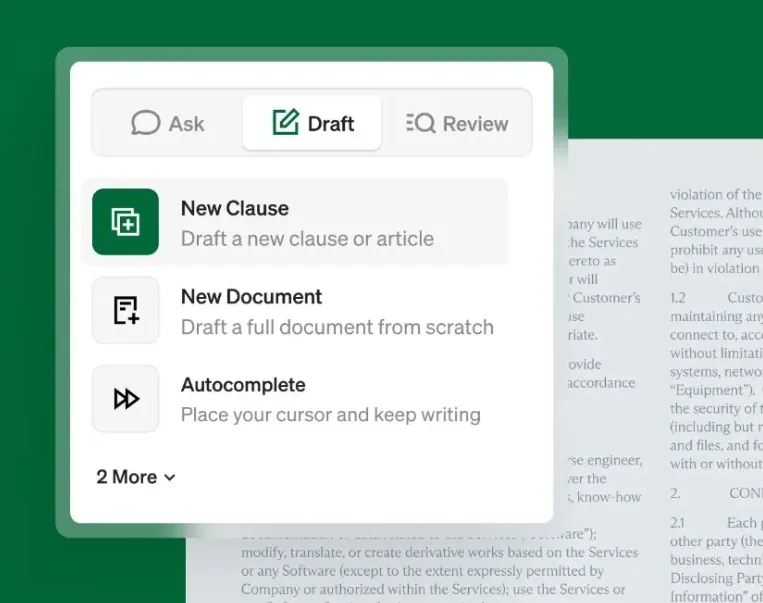
Spellbook solves one specific problem extremely well: it brings AI into Microsoft Word, which is where most transactional lawyers already live. Instead of switching to a separate tool, copying text in, and pasting output back, Spellbook runs inside your existing document environment.
The core functions are drafting new clauses, redlining existing ones, flagging risks, and comparing contract language against industry standards. For commercial lawyers who spend the majority of their time in contracts, the workflow reduction is real.
Spellbook is not a research tool and does not have database grounding for legal citations. Its value is in the drafting and review workflow, not in answering legal questions you would rely on without independent verification.
✅ PROS: Native Microsoft Word integration. Strong clause drafting and redlining. Market comparison feature flags non-standard terms. One of the most practical tools for transactional lawyers in 2026. ❌ CONS: Not a research tool. No citation verification. Less useful for litigators whose work is not contract-heavy. 💰 PRICE: Approximately $99–300 per user per month depending on plan and firm size.
Luminance — High-Speed Due Diligence
Luminance handles contract intelligence, due diligence, and contract lifecycle management at scale. It is built for high-volume document environments — M&A transactions, large commercial portfolios, and enterprise legal teams processing hundreds of agreements.
For firms doing that kind of work at volume, Luminance compresses review timelines significantly. For firms that do not operate at that document volume, the enterprise pricing is difficult to justify.
✅ PROS: Purpose-built for high-volume contract review. Strong due diligence automation. Handles multi-language contracts for cross-border work. ❌ CONS: Custom enterprise pricing. Overkill for firms not doing high-volume transactional work. 💰 PRICE: Custom pricing. Contact Luminance directly.
Litigation and eDiscovery
Relativity and Everlaw — High-Volume Document Review
For litigation teams handling large document sets, Relativity and Everlaw remain the standard platforms in 2026. Both have integrated AI layers for document review, investigation workflows, and eDiscovery processing.
These are not tools you evaluate based on a feature list. They are infrastructure decisions that involve IT, compliance, and procurement. For litigators whose matters involve large-scale document review, the question is not whether to use one of these platforms — it is which one fits your firm’s existing tech stack.
✅ PROS: Industry-standard for eDiscovery. AI-assisted review significantly reduces manual review hours. Strong compliance and chain-of-custody features. ❌ CONS: Custom enterprise pricing. Not relevant for firms that do not handle litigation with large document volumes. Significant implementation requirements. 💰 PRICE: Custom pricing for both platforms.
Practice Management
Clio Duo — The Integrated AI for the Business of Law
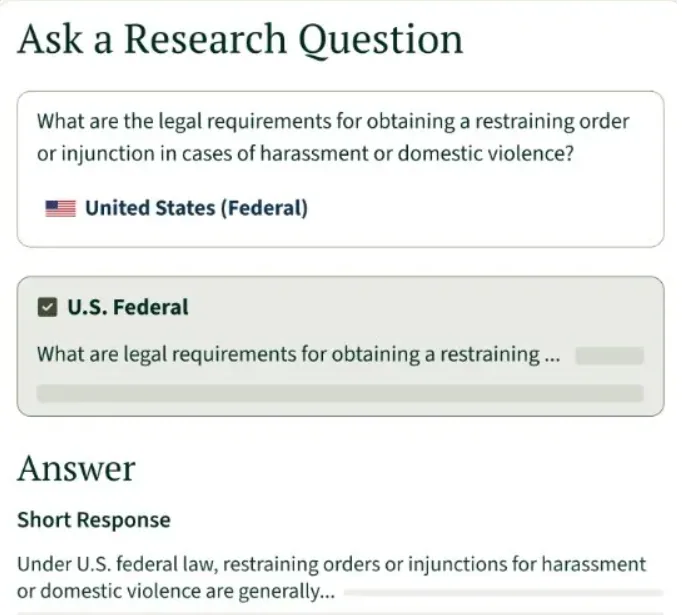
Clio Duo is the AI layer built into Clio Manage, the most widely used practice management platform for small and mid-sized firms. If your firm already runs on Clio, Duo adds AI assistance for client intake, matter management, drafting client updates, and administrative workflows without requiring a separate tool or login.
The value is not in the AI capability itself — Harvey and CoCounsel are more powerful on that dimension. The value is in the integration. Clio Duo works inside the system your team already uses, which means actual adoption rather than a tool that gets evaluated once and ignored.
✅ PROS: Seamless integration with existing Clio workflows. Strong for client intake and matter management automation. Most accessible price point of any legal-native AI on this list. ❌ CONS: Only relevant if you are already on Clio. Not a research or drafting tool in the way Harvey or Spellbook are. AI capability is narrower than standalone legal AI platforms. 💰 PRICE: Approximately $49–59 per month as an add-on to existing Clio plans.
General Purpose Tools — When ChatGPT and Claude Make Sense
ChatGPT and Claude are not legal AI tools. They are general-purpose language models that lawyers have found useful for specific tasks where citation accuracy is not the primary requirement.
For drafting first-pass memos, summarizing documents you already understand, generating client communication drafts, or brainstorming arguments before doing proper research, both tools save time. For anything where the output needs to be reliable on the law, both tools require a full verification pass before you rely on them.
The risk is not that lawyers are using ChatGPT. The risk is using it in contexts where it sounds authoritative but is not. Hallucinated citations appear in a confident, well-formatted response that reads exactly like a reliable one. That is the failure mode to understand before deciding when these tools fit in your workflow.
✅ PROS: Low cost entry point. Genuinely useful for drafting, summarizing, and brainstorming. Widely familiar interface with no learning curve. ❌ CONS: Hallucination risk on legal citations is real and well-documented. Consumer versions are not appropriate for client confidential data. Not a substitute for legal-native research tools. 💰 PRICE: Free tier available. Plus $20/mo for both ChatGPT and Claude.
Governance and Risk in 2026
The adoption numbers and the governance numbers tell two different stories. 69% of legal professionals are using AI. 54% of their firms have no AI training program. 43% have no AI governance policy.
Source: 8am Legal Industry Report (2026), ABA Legal Technology Survey Report.
That gap creates real risk — not theoretical risk, but the kind that shows up in malpractice exposure, bar complaints, and client data breaches. A lawyer using a consumer AI tool to summarize a confidential client document without understanding the data retention policy of that tool is not making a technology decision. They are making a risk management decision without the information to make it well.
The practical minimum for any firm using AI in 2026 is three things: a clear policy on which tools are approved for which tasks, a verification requirement for any AI-generated legal research before it goes into a filing, and explicit guidance on what client data can and cannot be shared with external AI systems. Firms that have not done this work are not behind on technology adoption — they are behind on risk management.
FAQ
Can I trust AI for legal citations in 2026?
Only if you are using a tool grounded in a verified legal database. Lexis+ AI with Shepard’s Citations, Westlaw AI, and CoCounsel with Westlaw integration are built to produce citation-backed answers you can verify. General-purpose tools like ChatGPT and Claude produce fluent legal language that can include citations to cases that do not exist or holdings that are wrong. The rule is simple: if the output is going into a filing or a client advice letter, it needs to be verified against primary sources regardless of which tool generated it.
Which AI tool is best for small law firms on a budget?
Spellbook or Clio Duo offer the most practical value for smaller practices. Spellbook at $99–300 per user per month is expensive relative to general tools but significantly less than Harvey or CoCounsel, and it delivers real workflow value for contract-heavy practices. Clio Duo at approximately $50 per month is the most accessible legal-native option if your firm already runs on Clio. For firms that cannot justify those costs yet, ChatGPT or Claude at $20 per month are useful for drafting and summarizing with the understanding that legal research outputs require independent verification.
What is the difference between Harvey and CoCounsel?
Harvey is built for enterprise law firms that need AI to operate across complex multi-matter workflows. It is more customizable, more powerful, and significantly more expensive — often $50,000 to $100,000 or more per year. CoCounsel is designed to be a capable legal AI that mid-sized firms can deploy without a six-month implementation process. Both are grounded in legal databases. Harvey via the 2025 LexisNexis alliance, CoCounsel via Thomson Reuters and Westlaw. The practical question is whether your firm needs Harvey’s workflow depth or whether CoCounsel’s more accessible model covers what you actually do.
Is ChatGPT secure enough for client data?
Consumer versions are not appropriate for confidential client information. OpenAI’s consumer products have data retention policies that are not designed for attorney-client privilege or legal ethics compliance. The enterprise version of ChatGPT, accessed through OpenAI’s API or the enterprise tier, offers zero data retention options and stronger privacy controls. Before using any AI tool with client data, the minimum due diligence is reading the data processing terms, confirming what the tool retains, and verifying it is consistent with your jurisdiction’s professional responsibility rules.
How much does Harvey AI cost for a mid-sized firm?
Harvey’s pricing is enterprise-structured and sold on annual contracts. Individual seat pricing is typically reported at $1,000 or more per user per month, with full firm deployments often ranging from $50,000 to $100,000 or more annually. Harvey does not publish pricing publicly — deals are negotiated directly. For a mid-sized firm evaluating Harvey, the practical question is not just the cost but whether the firm has the matter volume and workflow complexity to justify the investment relative to CoCounsel or Lexis+ AI at lower price points.
For more on AI in professional workflows, see our best AI tools for marketers, best AI tools for freelancers, Cursor vs GitHub Copilot, and Jasper vs Copy.ai.
Keep reading
Best AI Tools for Freelancers (2026): Free & Paid Picks
The freelancer AI stack in 2026, tested by actual workflow. Writing, design, admin, code, and client comms — no fluff, real pricing.
12 Best AI Marketing Tools (2026): Tested & Compared
The 12 best AI marketing tools for 2026 — free and paid. Compare top tools for copy, automation, and strategy to supercharge your workflow.
Best AI Tools for Developers (2026): Tested & Ranked
The developer AI stack in 2026, tested by workflow. Cursor, Windsurf, Claude Code, Copilot, Qodo and more — no hype, real pricing, honest verdicts.